|
|
|
What's the worst way you could imagine spending an afternoon (or several afternoons)? Some people would hasten to answer "getting a root canal." The truth is, this perception was born a few decades back, and the procedure no longer deserves such a dismal reputation. Dentistry has improved to the point that root canal procedures are no longer the painful, drawn-out ordeals your parents or grandparents might remember. Ironically, it appears that this outdated notion may be perpetuated most often by the uninitiated. According to the American Association of Endodontists (AAE), a recent survey reveals a telling bias: people who have undergone root canal treatment describe the process as "painless" six times more often than those who have never experienced it!
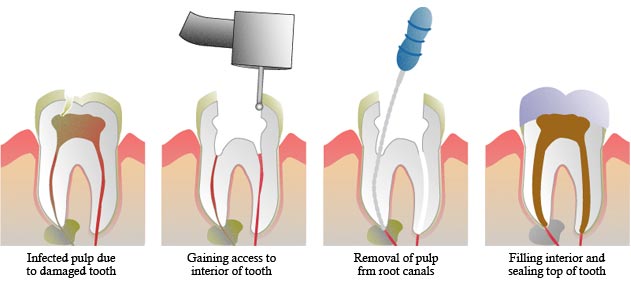
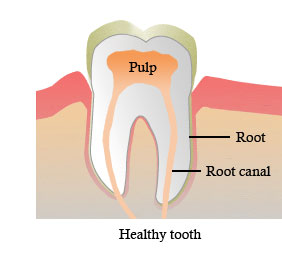
First of all, the term "root canal" is an informal name for a procedure known in the dental field as "root canal treatment," "endodontic treatment" or "pulpectomy." The origin of the word "endodontic" provides a clue to the process. "Endo" comes from the Greek for inside and "odont" from the Greek for tooth: endodontic treatment addresses the inside of the tooth. The word "pulpectomy" refers to the pulp that lives inside your tooth. The root canal itself is a cylindrical channel that runs vertically through the inside of each root of each tooth. (Front teeth have one root; back teeth have two to three roots and two to five canals.) The canals, as well as the tooth itself, are filled with a soft tissue called pulp. This tissue is an important source of nutrients to the tooth during its formation, but once the tooth reaches maturity, it can survive just fine without the pulp. Why is root canal treatment performed? Unfortunately, sometimes the pulp becomes inflamed or infected. This can happen for a variety of reasons, most often cracks, chips, decay, sudden trauma, or other damage to the tooth. The infected pulp can cause symptoms from toothache, to heat or cold sensitivity, to discoloration. Sometimes there are no symptoms, and only x-rays reveal the trouble spot. Regardless of source or symptoms, infected pulp is dangerous and, without intervention, can lead to pain, abscess, even loss of the tooth. Root canal treatment relieves the pain of infection and saves the tooth. What happens during root canal treatment? What used to require multiple lengthy trips to the dentist can now, in many cases, be completed much more quickly, usually in fewer than four hours. First, part of the top of the tooth is removed to allow access to the pulp. Next, all the pulp is carefully removed from the tooth and each of the root canals. Finally, the now-empty canals and interior of the tooth are filled and the top of the tooth is sealed.
Advancements in x-ray technology now make it easier to see details inside teeth and root canals. More and better choices of anesthetic make numbing the tooth simpler and quicker. And improvements in both tools and training have changed the experience for the better. The AAE reports that these days, most patients describe endodontic treatment to be no more difficult than having a cavity filled.
|
Copyright � Sesame Communications |
 What is a root canal?