|
| |
|
Slim sticks, chewy squares, coated pellets, classic gumballs, foot-long ribbons, shredded, or stuck in the middle of a lollipop – whatever kind of gum you chew, your teeth will thank you for considering one important factor: whether or not it contains sugar. Sugar is bad for your teeth We recommend that you avoid gum that contains sugar for the same reason you'd avoid any candy: sugary treats lead to cavities! When the bacteria in your mouth metabolize (or break down) sugar, what's left behind is acid, which eats away at the enamel coating of the teeth, producing holes that we call cavities. Sugarless gum can improve your oral hygiene On the other hand, chewing sugarless gum can have a positive effect on your teeth and gums. With no sugar to cause problems, the act of gum-chewing triggers your mouth to produce more saliva than usual. Saliva acts as a cleanser, washing away food particles and neutralizing the acid that can lead to cavities. Because of this effect, if you have just eaten a meal and don't have access to a toothbrush, chewing sugarless gum can help clean out your mouth. But bear in mind that no matter how much gum you chew, it's never a substitute for regular brushing and flossing.
In recent years, xylitol, a sweetener found in some brands of sugarless gum, has gained popularity. Various studies have shown that xylitol may play a direct role in reducing cavities. Let us know if you have any questions about xylitol or other sweeteners. Be on the lookout for jaw pain If you are a regular gum-chewer, be aware of the potential for TMJ (temporomandibular joint) problems. Frequent and long-term chewing, especially, can cause muscle fatigue or pain. Should you notice any aching, popping, or other discomfort in or around your jaw, take a break from the gum-chewing, and give us a call. A brief history of chewing gum The ancient Greeks chewed a substance called mastiche to freshen their breath. The chewy material was made of resin from the bark of the mastic tree, which is native to Greece and Turkey. In the tropical rainforest of what is now Central America, members of the pre-Columbian Mayan civilization had their own version of chewing gum, called chicle, which was derived from the sap of the sapodilla tree (known by locals as the chicozapote tree). North America also produced gum-friendly trees: it is said that Native American tribes in modern-day New England introduced their gum-chewing habit to early colonists. The ubiquitous spruce provided a chewy resin that the natives found thirst-quenching.
As you might imagine, there's not enough chicle in the world to keep up with today's high demand for chewing gum. Most gums today are made of synthetic latex combined with sweeteners, softeners, flavorings, and colorings.
|

 Should I chew gum that contains xylitol?
 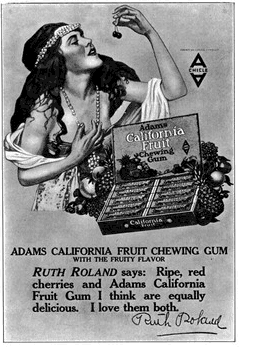 In the late 1800's, an American inventor named Thomas Adams endeavored to make various rubber products (including toys, galoshes, and bicycle tires) out of chicle he had imported from Mexico. He failed in each attempt, and found himself with a seemingly useless supply of chicle. One day he was inspired with the idea to use the chicle as a base for chewing gum. By the end of the century, Adams, Sons, and Co. was the most profitable chewing gum company in the country, and went on to create one of America's best-loved gums – you guessed it: Chiclets!